01. What Is Laser Marking?
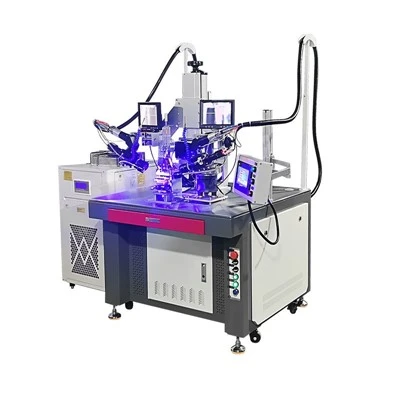
Laser marking is a non-contact process that uses a focused laser beam to permanently alter the surface of a material, creating visible marks for identification, traceability, or branding. The interaction can involve structural changes, melting, evaporation, or oxidation of the material surface. Unlike ink-based methods, laser marking produces durable, wear-resistant marks without consumables.
02. What Materials Can Be Laser Marked?
Laser marking works on a wide range of materials, but the appropriate laser type depends on the substrate. Fiber lasers excel on most metals (stainless steel, aluminum, copper, titanium, alloys). CO₂ lasers are best for organic and non-metallic materials like wood, glass, cardboard, and certain plastics. UV lasers handle delicate plastics, glass, ceramics, and heat-sensitive materials with minimal thermal damage.
03. Can Fiber Lasers Mark Stainless Steel?
Yes. Fiber lasers mark stainless steel effectively, with two common approaches: annealing (which creates high-contrast marks without removing material, leaving a smooth surface) and deep engraving (which removes material for deeper marks). The annealing method is particularly useful when surface integrity must be preserved.
04. Can Fiber Lasers Mark Plastic?
Fiber lasers can mark some dark or pigmented plastics, but results are inconsistent and depend heavily on the plastic's composition and additives. Clear or transparent plastics like acrylic generally do not absorb the 1064 nm fiber wavelength and will not mark. For reliable plastic marking-especially on light-colored, transparent, or heat-sensitive plastics-UV lasers are the better choice.
05. When Should I Use a UV Laser?
Use a UV laser (typically 355 nm) when marking delicate, heat-sensitive, or non-metallic materials that would be damaged by thermal processes. UV lasers are ideal for:
Plastics such as ABS, acrylic, polycarbonate, PET, and polyethylene, where they produce high-contrast marks without melting or charring.
Brittle materials like glass, ceramics, and sapphire, where they avoid micro-cracking.
Organic materials like paper, leather, and films, where they minimize burning or distortion.
Electronics requiring extreme precision with minimal heat-affected zones.
06. When Should I Use a CO2 Laser?
Use a CO₂ laser (typically 10.6 µm) for organic and non-metallic materials. It is the standard choice for:
Cardboard, paper, and packaging
Wood and wood products
Glass (frosted marks)
Acrylic (clean cutting and bright frosted engraving)
Certain plastics and coated surfaces
CO₂ lasers are not effective on bare metals unless the surface is pre-treated or coated.