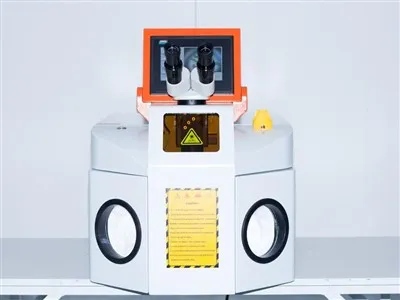
Laser Welding Machine .VS. Electric Arc Welding machine
Aug 11, 2025
Laser welding machines and electric arc welding machines are both widely used in industrial applications, but they differ significantly in terms of working principles, advantages, disadvantages, and suitable applications. Here's a detailed comparison:

Working Principle
Laser Welding machine:
Uses a highly focused laser beam (CO₂, fiber, or diode laser) to melt and join materials.
The beam provides intense, localized heat, enabling precise, high-speed welding.
Electric Arc Welding:
Uses an electric arc between an electrode (consumable or non-consumable) and the workpiece to generate heat.
Common types include MIG (Metal Inert Gas), TIG (Tungsten Inert Gas), and Stick (SMAW) welding.
Precision & Weld Quality
Laser Welding:
Extremely precise, with minimal heat-affected zone (HAZ).
Suitable for thin materials and intricate welds (e.g., electronics, medical devices).
Produces clean, spatter-free welds with high repeatability.
Electric Arc Welding:
Less precise, with a larger HAZ.
More prone to spatter, distortion, and slag formation (especially in Stick welding).
Better for thicker materials where precision is less critical.
Material Compatibility
Laser Welding:
Works well with metals (steel, aluminum, titanium, copper) and some plastics.
Can weld dissimilar metals with proper control.
Reflective metals (like aluminum & copper) may require special lasers (e.g., fiber lasers).
Electric Arc Welding:
Versatile for most metals, including thick steel, stainless steel, and aluminum (with TIG/MIG).
Not ideal for very thin or highly reflective metals.
Cost Considerations
Laser Welding:
Higher initial cost (expensive laser sources & optics).
Lower operating costs in automated high-volume production.
Minimal post-processing needed.
Electric Arc Welding:
Lower initial cost (machines are cheaper).
Higher consumable costs (electrodes, shielding gas).
May require grinding or cleaning post-weld.
Applications
Laser Welding:
Automotive (battery welding, precision components--Galvo laser welding machine).
Aerospace (thin sheets, critical joints--Handheld laser welding machine).
Electronics (micro-welding of circuits---Auto Laser welding machine).
Mold devices (Mould repairing--YAG mold laser welding machine).
Jewelry ( ring, necklace---Jewelry laser welding machine)
Electric Arc Welding:
Construction (structural steel beams).
Shipbuilding (thick plates).
Repair & maintenance (versatile for on-site work).
Heavy fabrication (pipelines, machinery).
Conclusion: Which One to Choose?
Choose Laser Welding if you need high precision, speed, and automation for thin or delicate materials.
Choose Arc Welding if you work with thick materials, need portability, or have budget constraints.
Would you like recommendations based on a specific application? A variety of laser welding machines for you to choose