Laser Cleaning vs Dry Ice Blasting
Sep 14, 2026
You may be already familiar with laser cleaning and dry ice blasting techniques. You know both of them are prominent cleaning techniques. However, laser cleaning has recently superseded many dry ice-blasting uses. To explain why, see "Laser Cleaning VS Dry Ice Blasting."
In this "Laser Cleaning VS Dry Ice Blasting" comparison guide, you will first know each method's cons. Then, you can use these cons to find out the benefits of others. So, this article will typically highlight two main sections.
The first part talks about the cons of dry ice blasting and the benefits of laser cleaning. You will learn how laser cleaning overcomes the limitations of dry ice blasting. In contrast, the second part does exactly the opposite. Finally, you will go through a summary to wrap up the content.
So, this is going to be a really amazing guide. We hope you find useful information here. Finally, you will be able to select the appropriate method for your project.
Limitations of Dry Ice Blasting and Opportunities of Laser Cleaning
Dry ice blasting is a very popular method. It generally uses compressed air along with dry ice pellets at a surface. The pellets quickly freeze the dirt and break them into dirt or grime. This technique is extremely suitable for delicate components. Typical examples could be found in the electronics and machinery industries.
Even though dry ice blasting works really well on some surfaces, it's not perfect. Because of these issues, it is not often used in other situations.
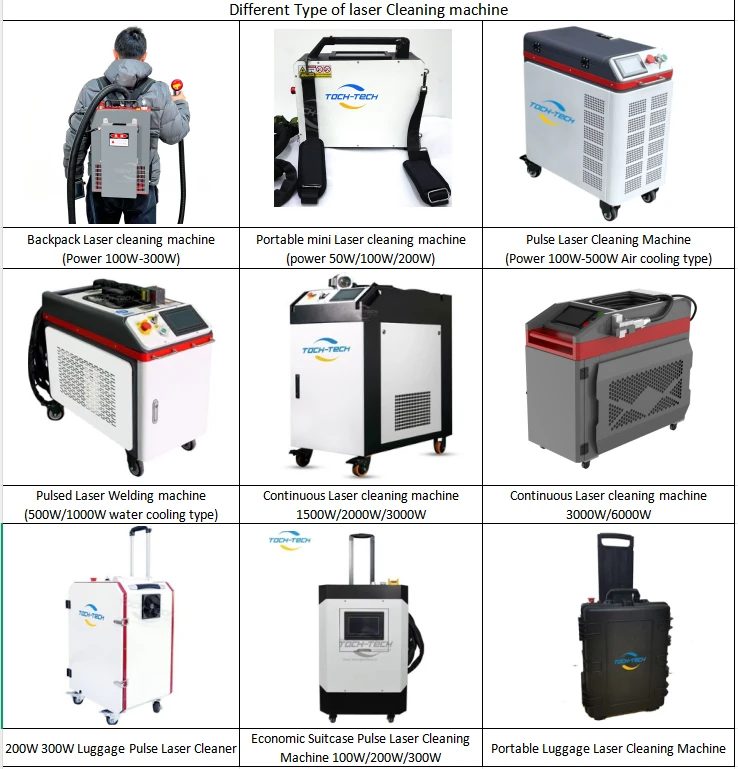
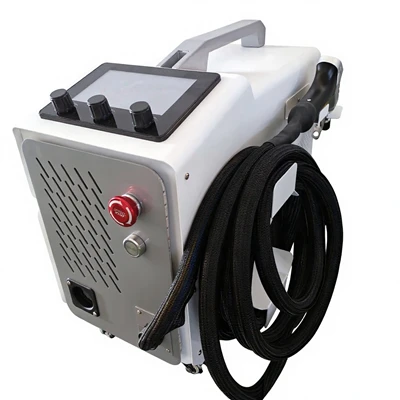
Laser cleaning is far safer than dry ice blasting. However, it is safer from dry ice blasting because it does not cause coldness and noise. Yet, it provided a very narrow and intense laser beam that may cause skin damage if measures are not taken. Therefore, operators are always recommended to wear protective clothes and goggles.
Laser cleaning is much safer for operators. It provides precision and perfect control over the laser beam. Because of this, there's less possibility of making operational hazards.
Laser Cleaning VS Dry Ice Blasting: High Cost
Dry ice blasting is an expensive method. As mentioned in the previous few sections, the dry ice blaster uses special storage equipment. Also, it costs much more to create dry ice from ammonia, ethanol, or other chemicals.
Besides, finding a reliable dry ice blaster supplier can sometimes be difficult. Besides, the equipment used for blasting is more prone to wear, which needs you to replace frequently. Furthermore, the method also requires an expert hand and high labor. All these add a significant cost to the dry ice blasting method.
Laser Cleaning VS Dry Ice Blasting: Safety
The dry ice beam is not supposed to get on your fingers or on other body parts. Not only because it's so cold and immediately causes frostbites, but also because the particles will have the same effect on your skin as they have on the dirt you are removing. A full protective suit is absolutely necessary with dry ice blasting, same with sandblasting. The noise pollution is also very big. Not only the operator of the machine, but everyone in a close area to the machine, needs hearing protection with dry ice blasting. Laser Cleaning is much safer and almost doesn't make any noise. You only need protective glasses, but other than that you don't really need anything else. The dirt that comes off, doesn't fly around, the workpiece stays cool and if you do shine on your hand with the laser beam for a second, it won't hurt.
How do you choose?
You can make a quick decision based on the following scenarios:
Choose laser cleaning when: You require high-precision rust or paint removal, need to clean precision molds or perform pre-weld treatment, and aim for the lowest long-term operating costs.
Choose dry ice cleaning when: You need to clean high-temperature equipment in-line (such as tire molds immediately after vulcanization) or remove thick, soft contaminants (such as sealant), and cannot tolerate any cleaning medium residue.