Fiber Laser vs UV Laser Marking
Oct 30, 2026
Fiber lasers and UV lasers use fundamentally different wavelengths and marking mechanisms, making them suited for opposite ends of the material spectrum. Fiber lasers are the workhorse for metals and high-speed industrial marking, while UV lasers are the precision tool for heat-sensitive plastics, glass, and delicate electronics.
| Feature | Fiber Laser | UV Laser |
|---|---|---|
| Wavelength | ~1064 nm (Infrared) | 355 nm (Ultraviolet) |
| Marking Mechanism | Thermal (heats, melts, or vaporizes material) | Photochemical ("Cold marking" - breaks molecular bonds without heat) |
| Heat Impact | Higher; can cause thermal distortion on sensitive parts | Very low; minimal heat-affected zone |
| Best Materials | Metals (steel, aluminum, titanium), hard plastics | Plastics, glass, ceramics, thin films, PCBs |
| Typical Speed | Very fast; ideal for high-volume production | Fast, but generally slower than fiber on metals |
| Source Life | Up to ~100,000 hours | Long, but typically lower than fiber |
| machine picture |
Fiber Laser Marking Machine |
UV Laser Marking Machine |
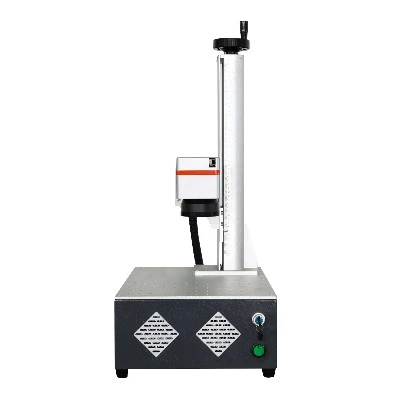
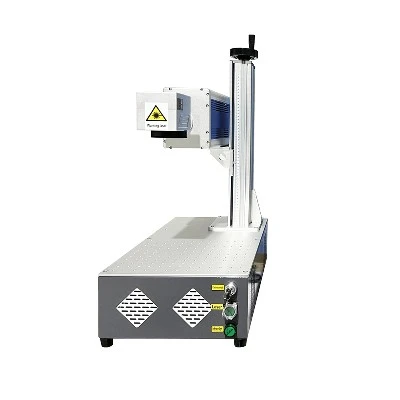
Fiber Laser
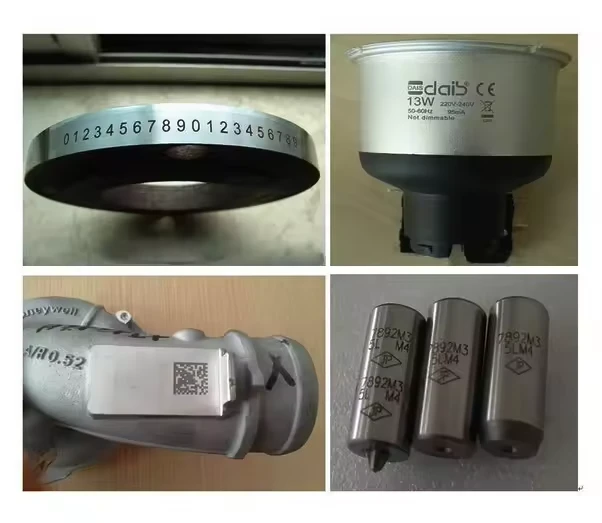
Fiber lasers are the default choice when durability, speed, and deep contrast on hard materials are the priority.
Metals Dominate: Fiber lasers excel at marking stainless steel, aluminum, titanium, and other alloys. They can produce deep engravings, high-contrast annealing marks, and even color marking on stainless steel by controlling oxide formation .
High Throughput: They are built for speed, marking thousands of characters per second, making them ideal for automotive, aerospace, and tooling industries where part traceability is critical .
Plastic Limitations: On plastics, fiber lasers work thermally. While they can mark certain hard plastics, the result often relies on foaming or carbonization, which may not be suitable for delicate or medical-grade plastics .
UV Laser
UV lasers are chosen when the priority is preventing damage to the surrounding material.
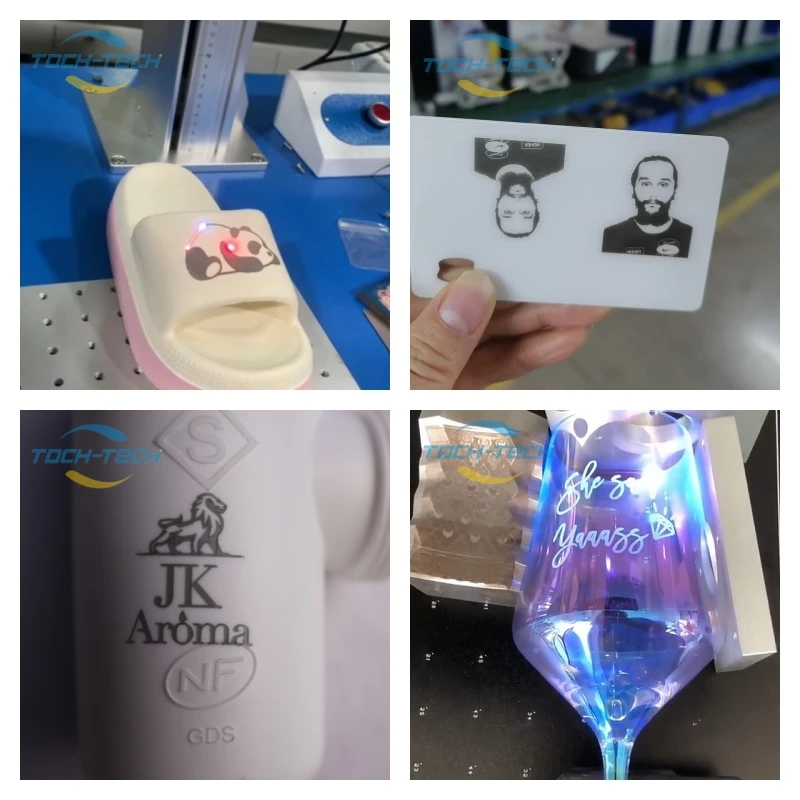
"Cold" Processing: Because UV photons have high energy, they can break chemical bonds directly in many materials without generating significant heat. This prevents melting, warping, or cracking .
Glass and Ceramics: Fiber lasers generally cannot mark glass well because the material doesn't absorb infrared light efficiently. UV lasers, however, can mark glass, ceramics, and acrylic cleanly, often creating a frosted look without micro-cracks .
Heat-Sensitive Plastics: UV lasers are the standard for marking medical devices, pharmaceutical packaging, and electronics (like PCBs) where a fiber laser might burn the substrate or leave unwanted residue .
How to Choose
Choose Fiber if your primary materials are bare metals, you need maximum speed for production lines, or you require deep engraving for part durability.
Choose UV if you are marking plastics (especially clear, colored, or medical-grade), glass, or delicate electronic components where any thermal stress or micro-cracking is unacceptable