Laser Cleaning FAQs
Sep 14, 2026
Laser Cleaning FAQs
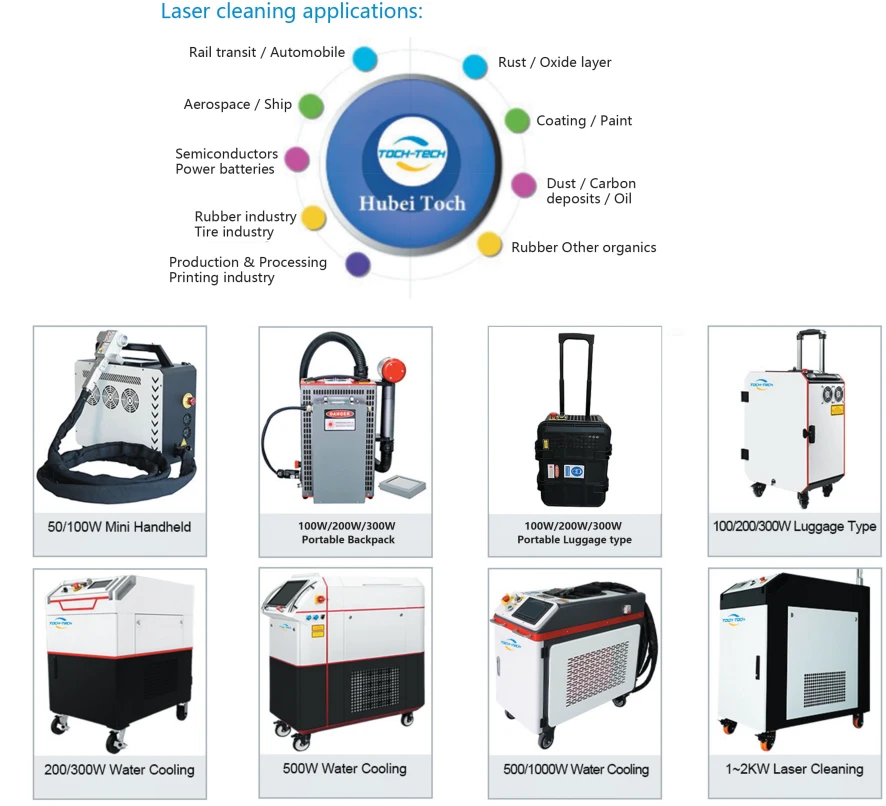
Q:1.What Is Laser Cleaning?
A: Laser cleaning is a non-contact, high-precision cleaning technology that uses a focused laser beam to remove contaminants from material surfaces. The laser energy is absorbed by the surface layer of dirt, rust, paint, or other residues, causing them to rapidly heat up and vaporize or ablate away. This makes the substrate clean and intact. It is often called "green cleaning" because no use chemicals and consumables.
Q:2.How Does Laser Cleaning Work?
A: A laser beam is directed onto the contaminated surface. The beam's energy is selectively absorbed by the contaminant layer (which has a different absorption rate than the base material). This causes the contaminant to heat up almost instantly, expanding and vaporizing or experiencing thermal shock and flaking off. Because the laser parameters (power, pulse duration, frequency) can be precisely controlled, the energy can be confined to the contaminant layer without affecting the substrate.
Q:3.What Can a Laser Cleaning Machine Remove?
A: Laser cleaning is highly versatile. It can remove a wide range of surface contaminants, including:
Rust (light surface rust to heavy, thick rust)
Paint (including powder coatings)
Oil and grease
Oxide layers
Welding residues and discoloration
Mold release agents and carbon deposits
Q:4.Can Laser Cleaning Remove Rust?
A: Yes. Laser cleaning is highly effective for rust removal. It works on all types of rust, from light surface oxidation to thick, old, and heavily corroded layers. The precision of the process allows it to stop at the metal surface, leaving it clean without etching or damaging the base material.
Q:5.Can Laser Cleaning Remove Paint?
A: Yes. Paint removal is one of the most common applications. Laser cleaning can strip paint, including tough powder coatings, from metal surfaces efficiently. It is often used in automotive, aerospace, and industrial maintenance to prepare surfaces for repainting or welding.
Q:6.Can Laser Cleaning Remove Oil?
A: Yes. The high-energy laser beam rapidly heats and vaporizes oil, grease, and other hydrocarbon-based contaminants from surfaces, leaving them clean and ready for further processing.
Q:7.Can Laser Cleaning Remove Oxide?
A: Yes. Laser cleaning effectively removes oxide layers from metal surfaces. This is particularly useful for preparing metals for welding or coating, as oxides can interfere with adhesion and joint quality.
Q:8.Can Laser Cleaning Remove Welding Residue?
A: Yes. It is widely used to clean weld seams, removing heat-affected zone discoloration, spatter, and slag. This not only improves the appearance of the weld but also enhances corrosion resistance without damaging the weld itself.
Q:9.Can Laser Cleaning Remove Powder Coating?
A:Yes. Laser cleaning can effectively remove powder coatings from metal surfaces. The process is efficient and does not damage the underlying substrate, making it an excellent alternative to chemical strippers or abrasive blasting.
Q:10.Can Laser Cleaning Clean Molds?
A: Yes. This is one of the most valuable applications. Laser cleaning precisely removes rubber, plastic, carbon, and other mold-release residues from mold surfaces without causing wear or dimensional changes. This extends mold life, reduces downtime, and eliminates the need for toxic chemical solvents.
Q:11.Can Laser Cleaning Damage Metal?
A: No, if all settings set up properly. Laser cleaning is a selective process. The laser parameters are adjusted so that the energy is absorbed by the contaminant layer and stops at the metal surface. This makes it safe for even delicate and precision-engineered components. However, incorrect settings (e.g., excessive power or slow speed) could potentially affect the surface, which is why proper training and parameter selection are important.
Q:12.Is Laser Cleaning Safe for Stainless Steel?
A: Yes, it is very safe. In fact, laser cleaning is a preferred method for cleaning stainless steel. Unlike sandblasting or abrasive methods that can scratch the surface and damage the protective chromium oxide layer (leading to corrosion), laser cleaning removes contaminants without compromising the surface's integrity. It is also safe for brushed and mirror-finish stainless steel.