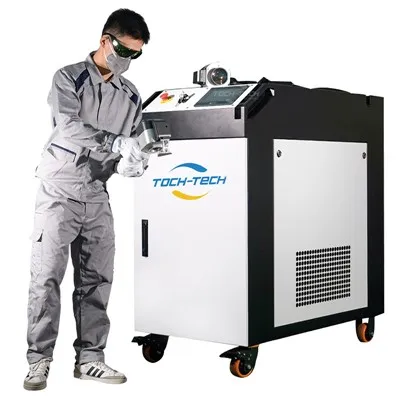
What is the differences between pulsed laser cleaning and continuous laser cleaning?
Feb 19, 2025
Pulsed Laser Cleaning vs. Continuous Laser Cleaning
Pulsed laser cleaning and continuous laser cleaning are two distinct surface cleaning technologies, each with unique characteristics and applications. Below are their key differences:

1. Laser Emission Method
Pulsed Laser: Utilizes short, high-energy laser pulses to remove contaminants or coatings. Each pulse delivers extremely high peak power within a very short duration (nanoseconds to femtoseconds).
Continuous Laser: Emits a steady, uninterrupted laser beam with lower peak power but a consistent energy output.

2. Thermal Shock & Material Interaction
Pulsed Laser: Generates minimal heat accumulation, reducing the risk of substrate damage. The short pulses evaporate or remove contaminants with minimal thermal effects.
Continuous Laser: Due to the continuous energy application, more heat is generated, which can cause greater thermal effects and potential damage to heat-sensitive materials.

3. Application Areas
Pulsed Laser:
Rust, paint, and oxide removal from metals
Cleaning artifacts and artwork
Semiconductor and aviation component maintenance
Continuous Laser:
Heavy rust and coating removal
Large surface preparation (e.g., shipbuilding, automotive industry)
Pre-welding treatment in manufacturing

4. Efficiency & Speed
Pulsed Laser: More selective, removing only contaminants while preserving the substrate. However, it is slower than continuous laser cleaning.
Continuous Laser: Covers a larger area at a faster rate, but may also affect the substrate along with the contaminants.

5. Energy Consumption
Pulsed Laser: Generally consumes less total energy per unit area due to its precise material removal method.
Continuous Laser: Uses more energy as the beam is continuously applied to the surface.